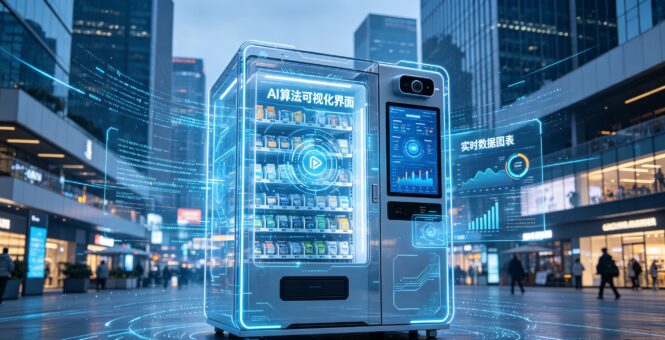
For decades, smart vending machines were simple devices designed to sell snacks and beverages. Today, powered by AI, data, and automation, smart vending machines are no longer standalone machines but intelligent retail systems integrating payment, inventory management, and real-time analytics into a unified platform.
This transformation reflects a broader shift in retail infrastructure:
Past: vending machines = product distribution
Present: AI + data + payment + logistics
Future: distributed retail infrastructure
As retail continues to digitize, smart vending machines are emerging as critical nodes within a connected, data-driven ecosystem.
From Vending Machines to AI Retail Infrastructure
The evolution of vending machines is closely tied to broader changes in the retail industry.
Driven by rising labor costs, demand for convenience, and the growth of unattended retail, vending machines are being repositioned as retail infrastructure nodes within urban environments.
According to Statista, the global vending machine market continues to grow steadily, supported by increasing demand for automated retail solutions..linkedln At the same time, insights from McKinsey & Company highlight that automation and digital integration are becoming core drivers of modern retail transformation
This shift is redefining vending machines as part of a larger system rather than isolated endpoints.
What Makes Smart Vending Machines AI Retail Platforms
A modern vending machine is not just a device—it is a connected system.
The transformation into an AI retail platform is driven by the integration of several key layers:
AI and Computer Vision
- Product recognition
- Recommendation systems
- Consumer behavior analysis
IoT Connectivity
- Real-time inventory tracking
- Device health monitoring
- Environmental control
Cashless Payment Systems
- Mobile payments
- QR codes and NFC
- Digital wallets
Cloud Platforms
- Centralized data processing
- Remote management
- Multi-location coordination
A smart vending machine is no longer a machine—it is a system.
The Technology Stack Behind Smart Vending Machines
The rise of smart vending machines is supported by a rapidly evolving technology stack.
AI & Computer Vision
Technologies similar to those used by Amazon enable:
- Automated product recognition
- Frictionless checkout
- Reduced reliance on manual interaction
IoT Sensors
Sensors monitor:
- Inventory levels
- Equipment status
- Environmental conditions
Cashless Payment Infrastructure
Modern machines support:
- QR-based payments
- NFC transactions
- Digital wallets
Edge Computing
Companies like Intel and NVIDIA are advancing edge AI solutions that allow:
- Local decision-making
- Faster response times
- Reduced latency
Why Brands Are Turning Smart Vending Machines into Retail Platforms
The shift toward AI retail platforms is driven by strong business incentives.
Lower Operational Costs
Unattended retail reduces:
- Labor costs
- Store expenses
- Physical space requirements
Data Collection and Insights
Smart vending machines generate:
- Consumer behavior data
- Demand patterns
- Location-based insights
Micro-Location Strategy
Machines can be deployed in:
- Office buildings
- Transit hubs
- Shopping malls
Location + Data = New Retail Strategy
Real-World Examples of AI Vending Platforms
Amazon
Amazon’s “Just Walk Out” technology demonstrates how AI can remove checkout entirely.
Alibaba
Alibaba integrates vending machines into its broader digital retail ecosystem.
JD.com
JD connects vending machines directly to its logistics network for optimized operations.
Challenges: Cost, Maintenance, and User Experience
High Hardware Costs
- Cameras
- Sensors
- Computing modules
Maintenance Complexity
- Hardware servicing
- Software updates
- Connectivity management
AI Accuracy and Trust
- Product misidentification
- Payment errors
- User trust issues
The Future of Smart Vending Machines as Retail Infrastructure
Looking ahead, smart vending machines will become core components of distributed retail networks.
Future trends include:
- Integration with e-commerce
- AI-driven personalization
- Expansion into last-meter retail
Smart vending machines are evolving into retail infrastructure nodes within a connected ecosystem
Smart Vending Conclusion
Smart vending machines are no longer just automated sellers—they are becoming AI retail platforms that integrate hardware, software, and data into a unified system.
For the retail industry, this represents a shift toward distributed, intelligent, and automated retail infrastructure.
The future of retail is not centralized—it is data-driven, automated, and built on smart vending machines
Self-Service Technology Insights
- Interactive Software and Interactive Hardware
- Coffee by Drone and AI Scan Checkout – Shenzhen
- Why are Digital Screens So Widespread in China
- Interactive Digital Software by Sitekiosk
- Facial Recognition Kiosk Hardware: A Buyer’s Guide and Executive Checklist
- Intel Core Ultra Series 3 with Intel vPro
- NRA National Restaurant Show
- 2026 Strategic Compliance Checklist