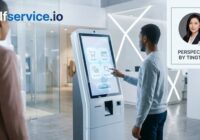
EAA Checklist 2026 Last Updated on March 29, 2026 by Craig Allen Keefner Table of Contents EAA Kiosk Compliance Checklist (2026 Edition) The European Accessibility Act (EAA) does not tell you how to build a kiosk.It determines whether your kiosk can legally be deployed in Europe. Compliance is achieved by applying EN 301 549 and proving—through design, testing, and documentation—that your system is usable by all people, including those with disabilities. 1. Scope Check — Does EAA Apply? If YES to any, you are in scope: ☐ ATM / banking kiosk ☐ Ticketing / transport kiosk ☐ Check-in (airline, hospital, hospitality) ☐ Retail self-order / POS ☐ E-commerce terminal / self-service purchase ☐ Government or public service kiosk Insight: If your kiosk facilitates transactions or public services, assume EAA applies. 2. Core Requirement — EN 301 549 Alignment You must align to EN 301 549 (ICT accessibility standard). Functional Performance (MANDATORY) ☐ Usable without vision ☐ Usable with limited vision ☐ Usable without hearing ☐ Usable with limited mobility ☐ Usable with limited cognition Insight: If any one of these fails → non-compliant 3. Non-Visual Operation (Critical Failure Area) ☐ Full workflow accessible via audio guidance ☐ Headphone jack or private audio output ☐ Screen reader / TTS support ☐ Logical navigation (step-by-step, no dead ends) ☐ No reliance on visual-only cues Insight: Reality: Most kiosks fail here. 4. Non-Audio Operation ☐ All functions available without sound ☐ Visual equivalents for alerts and confirmations ☐ Captions or visual prompts for instructions 5. Input & Interaction ☐ Touch targets usable with limited dexterity ☐ No requirement for multi-finger gestures ☐ No time-limited actions without extension ☐ Alternative input supported (keyboard, tactile, assistive tech) 6. Cognitive Accessibility ☐ Simple, consistent navigation ☐ Clear language (no jargon) ☐ Step-by-step workflows ☐ Error recovery is obvious and forgiving ☐ No “memory traps” (user must remember prior steps) 7. Visual Accessibility ☐ Sufficient contrast (WCAG baseline) ☐ Scalable text / readable UI… Read More »
See https://kioskindustry.org/lg-senior-kiosk-tv/ LG Electronics Launches Kiosk Practice Service for Seniors on TV It’s significant because it treats kiosk literacy for seniors as a mainstream “home appliance” feature, not a niche training program, and it fits into a broader accessibility and aging‑society strategy for LG and for Korea. Why this matters strategically It acknowledges kiosks as basic infrastructure. When only 17.9% of Koreans 65+ say they can use kiosks for ordering/registration, they are effectively excluded from a big chunk of everyday commerce. Turning kiosk training into a TV app reframes it as essential life‑skills support, like remote health or medication reminders. It extends LG’s senior platform. Easy TV was already a senior‑focused product with simpler UI, larger fonts, and services like LG Buddy for remote family support and reminders. Adding kiosk practice and brain‑health games deepens that ecosystem rather than being a one‑off feature. Implications for kiosks and self‑service It directly addresses the “fear and friction” barrier. Seniors can rehearse kiosk flows (burger QSR, café, food court) end‑to‑end—from item selection through payment—without time pressure, queues, or social embarrassment. That’s the biggest psychological blocker in real stores. It builds a training channel retailers don’t control. Instead of retailers installing special training kiosks, training moves upstream into the home; in theory, chains could later co‑design TV scenarios that match their own UIs. This opens a new B2B content/partnership angle for LG. Business and market angle It differentiates LG in an aging‑market race. South Korea, Japan, the US, and EU are all dealing with rapidly aging populations; LG has already said Easy TV is intended for export to those markets. Kiosk training plus brain games and Buddy give LG a clearer senior‑lifestyle value proposition than “just a simpler TV.” It complements LG’s own kiosk hardware strategy. LG is promoting more accessible kiosk designs (larger touch targets, better UX, etc.). Teaching seniors kiosk mental models at home makes it more likely that LG‑style kiosk UX conventions become the default “learned” pattern in the population. Policy and accessibility significance It aligns with government concern over the digital divide. Korea has already been running kiosk‑training programs through senior centers because older adults struggle with digital self‑service in a “contact‑free” culture. By quantifying the gap (only 17.9% confident users) and productizing a response in a mass‑market TV, LG positions itself as a private‑sector partner in digital inclusion. It normalizes “practice mode” as part of UX. If this model spreads, you could see kiosk “simulator” apps on TVs, tablets, and phones become an expected accessibility feature, similar to screen readers or high‑contrast modes today. From our kiosk‑industry lens, the interesting question is whether large QSR/retail brands will start co‑developing LG‑style at‑home training experiences that mirror their own flows—do you see clients being willing to invest in that kind of pre‑store training content? From Chosun March 2026 A service has been launched allowing seniors to practice using kiosks (unmanned payment devices) on TV beforehand. LG Electronics announced on the 29th that it will introduce the ‘CareU’ service, which enables kiosk ordering practice on the ‘LG Easy TV.’ Currently, the service is only available on the ‘LG Easy TV,’ a senior-friendly TV released last year by LG Electronics, reflecting feedback from senior customers. The kiosk practice service was developed to assist senior customers struggling with complex screen layouts and unfamiliar payment procedures. According to the Ministry of Health and Welfare’s ‘2023 Senior Citizens Survey,’ only 17.9% of those aged 65 years old and older responded that they could use kiosks for ordering and registration. The ‘CareU’ service is designed to help users easily learn kiosk usage in various situations by realistically implementing three everyday kiosk environments: hamburger restaurants, cafes, and food courts. For example, users can experience the entire process—from selecting food to payment—by placing an order via a kiosk at a hamburger restaurant, as demonstrated on the screen. LG Electronics stated, “We planned this service to help senior customers practice using kiosks comfortably at home, thereby boosting their confidence in using digital devices and making kiosk usage easier.” LG Electronics has also incorporated brain health games for senior customers into not only the ‘LG Easy TV’ but also the ‘StandbyMe 2’ and ‘StandbyMe Go’ devices. The company plans to sequentially expand the application of the ‘LG Buddy’ and brain health games to other LG smart TVs.
see https://kioskindustry.org/raspberry-pi-digital-signage-software-released/ SiteKiosk Online goes Raspberry Pi January 29, 2026 SiteKiosk Online expands to Raspberry Pi, delivering a full-featured kiosk client. Sign up for the early beta starting at Integrated Systems Europe 2026. SiteKiosk Online’s family of supported OS for the kiosk client will grow! By the end of this year, we will have a new client to bring SiteKiosk’s platform to the Raspberry Pi. This will be not only a simple Digital Signage client but a full featured Kiosk client. All key SiteKiosk Online features are supported, so you get the complete protect, manage, and show experience. Starting with this year’s ISE in Barcelona, you can sign up to become part of our early beta program. Just send an email to sales-america@sitekiosk.com. Reference https://www.sitekiosk.com/news/sitekiosk-online-goes-raspberry-pi/
See https://kioskindustry.org/self-service-tech-news-march-29/ Last Updated on March 29, 2026 by Today, March 29, 2026, the self-service industry is recalibrating as the QSR sector reaches a $1.55 trillion valuation milestone, driven more by tech-enabled price optimization than foot traffic. While the “hardware wars” continue in Asia, the domestic focus has shifted to Unified Automation Stacks —moving away from fragmented “cool kiosks” toward integrated, resilient infrastructure that manages everything from labor to food safety. Table of Contents Top Industry Headlines Intel & Hardware Intelligence Asia-Pacific Tech Update More Resources Subject Hubs: Start Here Top Industry Headlines 2026 QSR Sales Projected to Hit $1.55 Trillion Amid “Price-Driven” Growth Industry reports indicate that while nominal sales are soaring, real volume growth is modest, forcing brands to use kiosks and AI-analytics to protect margins through aggressive “Value vs. Premium” menu balancing. Source: Harmelin Media SiteKiosk Online Expands to Raspberry Pi for “Mass-Scale” Kiosk Deployments Announced this weekend, the new client allows operators to deploy full-featured, secure kiosk environments on low-cost Raspberry Pi hardware, targeting budget-conscious retail and smart city projects. Source: SiteKiosk The “Automation Stack” Becomes the 2026 Baseline for Retail Survival Industry leaders are officially declaring the end of “pilot programs,” with major retailers like Walmart moving to a 5-layer tech stack that integrates Edge AI, thermal vending, and mandatory ADA compliance. Source: Kiosk Industry Drive-Thru Kiosks Deliver 30% Higher Average Tickets than Staffed POS New 2026 performance data shows that customer-led ordering at the drive-thru is consistently outperforming human-led POS by providing reliable, visual upselling and reducing labor costs by 25%. Source: NovaTab Digital Signage 2.0: Shift from “Scaling Reach” to “Scenario-Based Interaction” Analysis of March 2026 trends reveals that signage is moving away from classic advertising funnels toward flexible models where screens act as scenario-based tools for deep, data-driven customer personalization. Source: Advision Digital Absolute Security Debuts “Self-Healing” Endpoint Resilience for Kiosks In response to $400B in annual downtime losses, new 2026 security protocols allow globally distributed kiosks to autonomously repair their own security software if it fails or is tampered with. Source: Absolute Security Intel & Hardware Intelligence Intel Core Ultra Series 3 Certified for 24/7 “Industrial Edge” Use Intel’s newest AI PC platform, built on the 18A process, is now officially certified for embedded use in robotics, medical kiosks, and smart cities, featuring 50 NPU TOPS for local AI processing. Source: Business Wire Intel vPro Moves to the “Front Door” of Autonomous Retail Intel is shifting its positioning from a component supplier to a visible co-brand, partnering with KIOSK Information Systems and WINTEC to power vision-assisted loss prevention and “store-in-a-box” concepts. Source: ThinClient.org 2026 Platform Security Report: Intel Hardens Hardware-to-Cloud Link Released this week, the report outlines new hardware-level protections designed to secure the increasingly large fleets of AI-enabled kiosks against sophisticated physical and remote bus attacks. Source: Intel Newsroom Asia-Pacific Tech Update Sakura Internet Selected as Japan’s First Domestic “Government Cloud” Provider In a major move for digital sovereignty today, Japan’s Digital Agency selected Sakura Internet alongside U.Sgiants to provide the common information infrastructure for all central and local government services Source: Japan Times APAC Self-Service Market Projected to Hit $11.5B by 2033 Driven by the world’s highest rates of QR-code and digital wallet adoption, the Asia-Pacific region is currently the fastest-growing frontier for 8K signage and AI-enabled ordering kiosks. Source: AVIXA Xchange Avalue Technology Debuts “Battery-Powered” Mobile Kiosks for Japan To solve chronic labor shortages, Avalue has launched wireless kiosks that can be moved anywhere on a retail floor without permanent wiring, specifically targeting the Japanese convenience store market.… Read More »
See https://kioskindustry.org/april-2026-gaps-progress-report-on-ansi-evsp-2023-roadmap/ April 2026 Gaps Progress Report on ANSI EVSP 2023 RoadmapBy theANSI Electric Vehicles Standards Panel (EVSP) The ANSI Electric Vehicles Standards Panel has released its April 2026 working draft “Gaps Progress Report” updating the 2023 Roadmap of Standards and Codes for Electric Vehicles at Scale. The report tracks progress on priority gaps around battery safety, charging infrastructure (including megawatt and wireless charging), grid integration, and cybersecurity that directly affect how public-facing EV charging is deployed and maintained. Stakeholders are invited to comment on individual gaps or propose new ones to help keep the roadmap aligned with real-world deployment and operations Call for Comment Instructions:
See Association of Kiosk Manufacturers at National Restaurant Show The National Restaurant Association Show returns to Chicago from May 16–19, 2026, bringing together the full spectrum of foodservice innovation—from global brands to emerging technology providers shaping the future of hospitality. Held at McCormick Place, the event serves as a central hub for operators, IT leaders, and solution providers focused on improving efficiency, customer experience, and profitability. Visit Booth 5829 in the North Building to explore the latest in self-service kiosks, digital ordering, contactless engagement, and edge-powered restaurant technology designed to meet the evolving demands of modern foodservice environments. What and Where To See Floorplan Registration Schedule What To See in our booth Vispero — accessibility for quick serve restaurants and self-order kiosks Pyramid Computer – Kiosks — two different self-order kiosks Set up a Meeting text 720-324-1837 whatsapp or wechat — NRA National Restaurant Show See Association of Kiosk Manufacturers at National … Embedded Industrial Computing and Giada Summary: Giada at Embedded World 2026—Powering the Edge AI Transition At Embedded World 2026 in Nuremberg, Giada Technology showcased its latest … China Infrastructure and… Read More »
What’s Going On In Europe With Payments? Strategic takeaway: Europe isn’t dumping Visa and Mastercard—it’s quietly rewiring the plumbing so that, by the end of this decade, US card schemes become optional rather than existential for its domestic payments. Question: did Europe just turn their back on VISA and Mastercard Answer: Not entirely, but the “breakup” has officially started. As of March 2026, Europe is making its most aggressive move in decades to end its 95% dependence on U.S. payment infrastructure. It’s less of a sudden “turning of the back” and more of a massive, coordinated “eviction notice” through three major projects: Article – https://kioskindustry.org/payment-trends-in-europe-with-visa-and-mastercard/ Links Embedded Industrial Computing and Giada Summary: Giada at Embedded World 2026—Powering the Edge AI Transition At Embedded World 2026 in Nuremberg, Giada Technology showcased its latest … China Infrastructure and Smart Lockers Summary: Smart Lockers as Urban Infrastructure—Lessons from China In China’s high-density cities, door-to-door delivery is increasingly inefficient.… Read More »
Making It Easy For Customers To Pay “The less customers feel the payment, the more they spend.” One of our principles of ROI is keep TTT (Time to Transaction) at the top of priority metrics. Customers dwelling over payment stage are not good. Frictionless payments are no longer just a convenience feature—they are a primary driver of consumer behavior and revenue growth. New research from NMI confirms what many in self-service and unattended retail have been seeing in the field: when you remove effort, hesitation, and visibility from the payment process, consumers don’t just complete transactions faster—they spend more, buy more often, and think less about the transaction itself. In effect, payments have evolved from a necessary step in commerce into a behavioral lever that directly influences basket size, frequency, and brand loyalty. Article – https://kioskindustry.org/frictionless-payments-and-consumer-spending/ Excerpt – Frictionless payments are rewiring consumer spending habits, according to new research from NMI®, a global leader in embedded payments infrastructure. In its “Psychology of Payments” survey of 1,000 U.S. adults, half (50%) say they shop more frequently when payments feel seamless, while an equal share (50%) admit they abandon carts when the checkout process feels complicated or frustrating. Embedded Industrial Computing and Giada Summary: Giada at Embedded World 2026—Powering the Edge AI Transition At Embedded World 2026 in Nuremberg, Giada Technology showcased its latest … China Infrastructure and Smart Lockers Summary: Smart Lockers as Urban Infrastructure—Lessons from China In China’s high-density cities, door-to-door delivery is increasingly inefficient. Smart lockers have… Read More »
Why keeping cash in the mix still matters for consumers, small merchants, and the self‑service systems that serve them Scroll through the headlines and you’d think cash is already dead. Between mobile wallets, tap‑to‑pay cards, QR codes and “no‑cash” lanes, it’s easy to forget that simple paper money is still doing a lot of work in the background of the U.S. economy. For anyone who cares about payments, consumer choice and financial inclusion, cash is not nostalgia—it’s infrastructure. Full Article https://kioskindustry.org/why-cash-still-matters-in-a-tap-to-pay-world/ Embedded Industrial Computing and Giada Summary: Giada at Embedded World 2026—Powering the Edge AI Transition At Embedded World 2026 in Nuremberg, Giada Technology showcased its latest … China Infrastructure and Smart Lockers Summary: Smart Lockers as Urban Infrastructure—Lessons from China In China’s high-density cities, door-to-door delivery is increasingly inefficient. Smart lockers have emerged …… Read More »
Summary: Giada at Embedded World 2026—Powering the Edge AI Transition At Embedded World 2026 in Nuremberg, Giada Technology showcased its latest evolution of embedded computing hardware. The focus was clear: creating the high-performance, industrial-grade backbone required for sophisticated self-service and AI-driven edge applications. Reference — Giada Showcases Embedded Computing Innovations at Embedded World 2026 www.giadatech.com/about/news1193.html Embedded World 2026,… Read More »