Neat stuff in Shenzen
AI Scan Checkout — https://www.instagram.com/reel/DVdktvhkRsw/ —
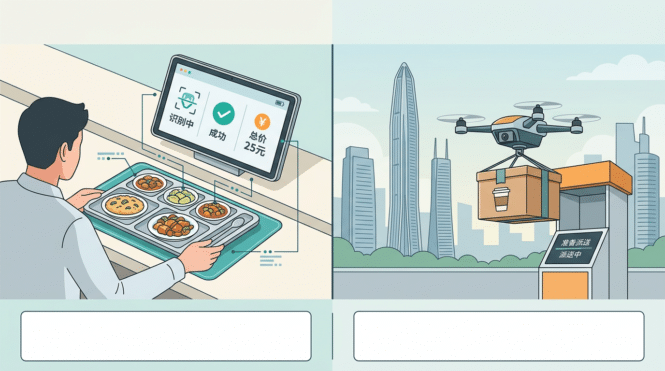
The Reel shows an AI-powered scanner in China that automatically recognizes the food items on a cafeteria-style tray and calculates the total price you owe. The narrator explains that you simply place your tray under the scanner, it analyzes what’s there, and the system instantly displays the amount due, with the example tray costing “about four” (likely four dollars or four units of local currency).
These AI tray scanners are still a niche technology, but they are becoming fairly common in modern canteens and smart cafeterias in larger Chinese cities. You will mainly see them in university canteens, factory cafeterias, and newer “smart” self-service restaurants where throughput and labor savings matter most.
They are not yet universal across China; many smaller or traditional eateries still rely on staff or basic self-checkout with QR codes, but AI-based vision systems are one of several AI tools being rolled out across the wider food‑service sector. Put simply, in big cities and newer institutional canteens, you’re increasingly likely to run into this kind of scanner, but it is far from the default nationwide.
- Coffee by Drone – https://www.instagram.com/reel/DWlcmr3CI-E/ — From the surrounding info, the Reel shows a drone-based coffee delivery experience in Shenzhen, China. It highlights ordering coffee with a delivery mode option that includes drone delivery, then focuses on how advanced and “next level” this drone service looks in that city.
-
Drone coffee delivery is real in China, but it is concentrated in specific pilot areas and parks, especially in Shenzhen, rather than being a nationwide standard option.
How it works in Shenzhen
-
Services are typically run by Meituan, China’s largest food‑delivery platform, using fixed “drone stations” or kiosks in parks and dense urban areas.
-
You scan a QR code at the station, which opens Meituan’s app, order coffee or drinks, and then track the drone in the app until it drops the order into a locker or dispenser box.
-
Typical delivery times reported are around 10–30 minutes, with standardized packaging boxes designed so drones can handle hot drinks safely and the boxes can be reused.
How widespread it is
-
Shenzhen has become a flagship city: Meituan has set up more than 30 drone delivery routes there, fulfilling hundreds of thousands of orders (food, drinks, small goods) from multiple launchpads.
-
Nationally, Meituan reports dozens of drone routes across several major cities (Beijing, Shanghai, Guangzhou, Nanjing, Shenzhen) with total drone deliveries in the hundreds of thousands, but these are still defined, geo‑fenced corridors, not citywide coverage.
-
Use cases include parks (Shenzhen Bay, Central Park, Talent Park), some residential communities, and tourist spots like Badaling Great Wall, where they deliver coffee and snacks within a few kilometers.
Big picture
-
For residents and tourists in the right neighborhoods of Shenzhen or select pilot zones in other cities, coffee‑by‑drone is becoming a normal, repeatable experience.
-
For the average person in China, especially outside tier‑one cities, it is still a novelty rather than a standard delivery option, though regulators and platforms are clearly pushing to expand low‑altitude “drone logistics” over the next few years.
-